
Table of Contents
A common version of this story: a Chennai business owner is told “we need a rebrand” because the logo looks dated, yet customers still find the shop by the colour of its signboard. The brand refresh vs rebrand question usually arrives as one yes-or-no decision, and that framing pushes owners toward either a costly overhaul or a cosmetic fix.
This guide from Push Digital, a Chennai-based 360° branding and digital marketing agency, splits that decision into six smaller ones. Each brand asset, from the name to the signboard, gets its own test: keep it, evolve it, or replace it. The result protects what customers already recognise and spends budget only on what blocks the business from growing. It is written for owners and marketing heads of established businesses in Chennai and Tamil Nadu.
Key Takeaway: Decide asset by asset instead of brand by brand. Keep what customers recognise before they read anything, evolve what is dated but familiar, and replace only what contradicts where the business is heading. Established businesses in Chennai and Tamil Nadu can end up with a mix of all three.
Brand Refresh vs Rebrand: Where the Line Actually Sits
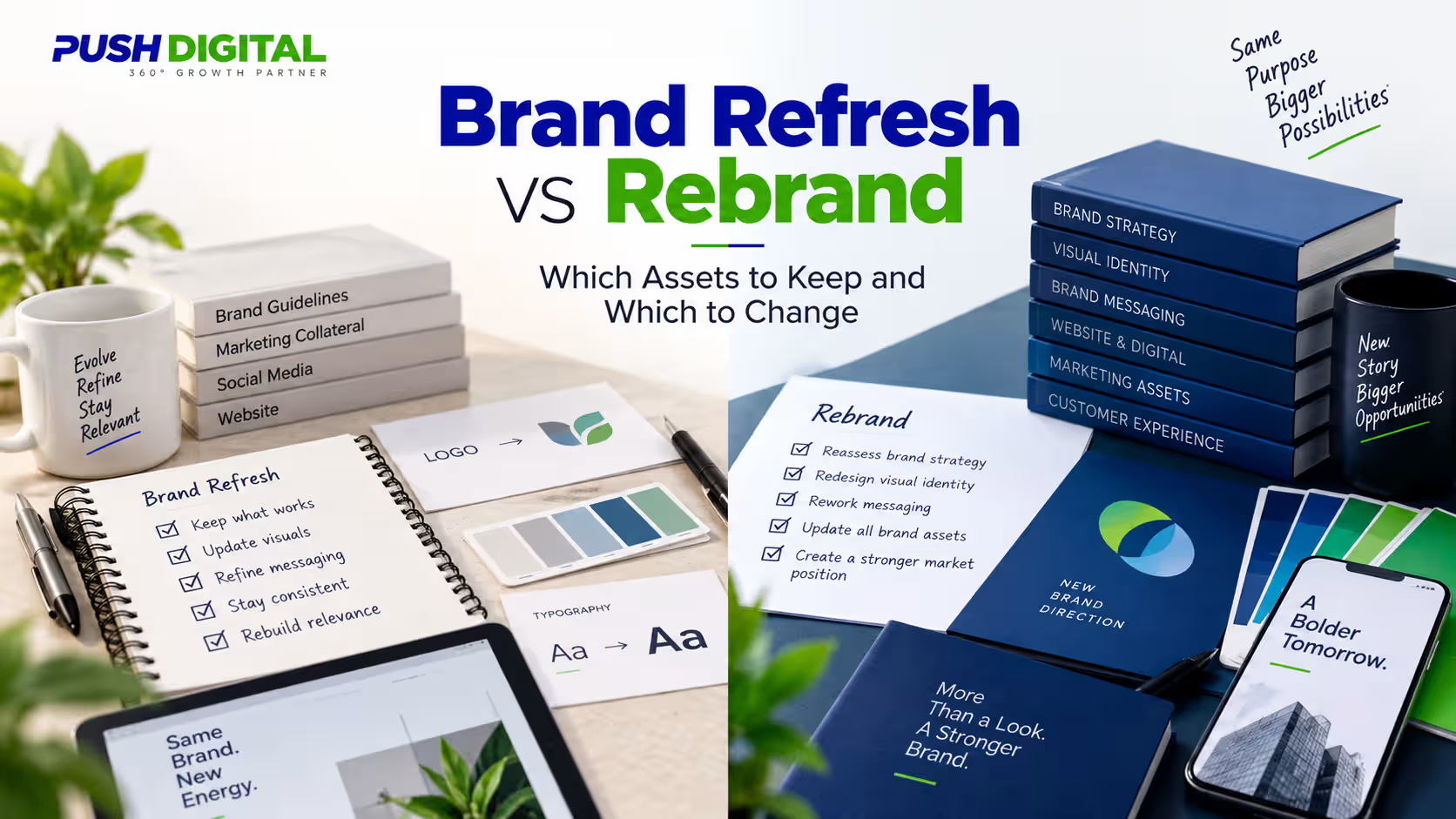
A brand refresh keeps the name, positioning and core recognition cues, and updates how they look and sound. A rebrand changes any of the name, positioning, audience or tone of voice, or replaces the logo mark or colour customers recognise. The dividing line is what customers must relearn, not how many files the design team touches.
Guides that compare a brand refresh vs full rebrand tend to stop at the definition and hand you a single verdict. Consider a refresh that swaps the primary colour and the pack shape: customers must relearn both, so it has become a rebrand without anyone calling it one. The reverse mistake is subtler. A business whose brand positioning has moved from wholesale to direct-to-consumer needs new messaging. If it gets a logo redesign and nothing else, the mismatch survives the launch.
| Element | Brand refresh | Full rebrand |
|---|---|---|
| Name | Kept | Kept or changed |
| Logo | Redrawn, same idea | New idea or new mark |
| Primary colour | Shade adjusted | New colour |
| Positioning | Unchanged | Redefined |
| Tone of voice | Sharpened | Rewritten |
| Applications | Updated over time | Reissued on a cut-off date |
The practical way to settle a brand refresh vs rebrand debate is to ask where the trigger sits. Signs you need a rebrand tend to live in the business: a new customer segment, a merger, a leadership change, or an offer the old name no longer fits. If none of those has happened, the fault is more likely in execution, and a visual identity project can begin with a small audit.
Which Parts of Your Brand Carry Equity?

Equity sits in whatever customers use to find and trust you without thinking: the name they say aloud, the colour they spot from across the road, and the number already saved in their phones. Anything a customer recognises before reading a word is equity, and anything only your staff notice is not.
Take a T. Nagar textile retailer whose signboard green is recognised from across the road, while the logo beside it looks a decade old. The shop’s equity sits in the green. A brand equity audit would mark the colour keep, the logo evolve, and the printed carry bags replace once current stock runs out.
Ask a handful of regular customers to describe your business without naming the logo. Their answers show which cues carry brand recognition: a colour, a word, a shape, a person. Then check what strangers meet first, such as a Google search result, since online recognition may rest on another cue.
One asset is legal rather than visual: a trademark registration. If your name or logo is registered, ask your trademark attorney whether the registration covers the new version before any design is signed off. A change that looks small on screen may not be small on the register.
The Decision Tree: Keep, Evolve or Replace Each Asset
Most guides hand the whole brand one verdict. A working brand is made of six separate assets, and each can go a different way.
Push Digital’s Brand Equity Decision Tree is a six-row test for owners and marketing heads who need to settle what changes before anyone briefs a designer. Answer the test question for each asset, read across to its verdict, and the brand audit is complete when every row has one.
| Brand asset | Test question | Keep if | Evolve if | Replace if |
|---|---|---|---|---|
| Business name | Do customers say it aloud? | Yes, and it fits the offer. | Spelling or short form varies across channels | No longer describes what you sell |
| Logo mark | Is the shape recognized without the words? | Shape is recognized. | Shape is known, drawing is crude. | Nobody recognizes it. |
| Primary color | Is it the first thing people recall? | Recall the cue that passes contrast. | Strong recall, shade fails text contrast | Generic or shared with rivals |
| Type and layout | Does it hold across print and screens | Holds in Tamil and English | Breaks on small screens | No Tamil companion, or unreadable at your smallest print size |
| Tone and positioning | Does it still describe who you serve | Matches today’s customers | The undersells the offer, or the tagline is dated. | The audience or offer has changed. |
| Signage, packs and forms | Is it still legible and consistent with the brand | Legible and consistent | Layouts work, colours or type are dated | Name or logo mark has changed |
Count the verdicts on four rows: name, positioning, logo mark and primary colour. When all four read keep or evolve, the brand refresh vs rebrand decision lands on a refresh. When the name or positioning reads replace, plan a full rebrand. When name and positioning read keep but the logo mark or primary color reads replace, you are doing a visual rebrand. Budget and plan the rollout as a rebrand, even though the business underneath stays the same. The other rows set the scope of whichever path you land on.
The logo row needs its own rule. Keep the shape if strangers recognize it, even when the drawing is weak. Redraw the same idea more cleanly and the logo has been refreshed; change the idea itself, and it has been replaced.
The colour row has a published standard behind it. WCAG 2.2 Level AA, Success Criterion 1.4.3, requires a contrast ratio of at least 4.5:1 for text and 3:1 for large text, and it exempts text that is part of a logo. Brand guidelines do not excuse low contrast anywhere else, so a green that suits a signboard can still fail as web body copy. In that case evolve the shade. The WCAG 2.2 contrast requirements explain how to test a shade.
What a Rebrand Touches Beyond the Logo

Say a second-generation manufacturer in Ambattur moves from supplying other businesses to selling a consumer product under the founder’s company name. The name no longer suits the new buyer, so it changes, and packaging design becomes part of the project.
Push Digital has been building brands out of Chennai for more than 25 years. The practical lesson: write down every place the name and logo appear before design work starts, because a name change usually touches more places than the first guess. The steps below follow the usual order of work, and much of this asset migration runs on other people’s schedules.
- List every place the name and logo appear, from signboards and invoices to uniforms and social profiles.
- Run a trademark availability search on the new name before any design starts, and ask your trademark attorney to confirm the result.
- Update every record that carries the business name, starting with the legal steps below.
- Change the Google Business Profile and marketplace listings on the day the new name goes live.
- Redirect every old web address to its new equivalent, as the next section explains.
- Run old and new packs and signage side by side until old stock is used, then retire the old set on a fixed date.
Section 13(2) of the Companies Act, 2013, requires a company to pass a special resolution and obtain Central Government approval before it changes its name. The company applies for that approval on the Ministry of Corporate Affairs’ Form INC-24. Once the new name is approved, GST registration, bank accounts, the trade license, and, for food businesses, the FSSAI license all need updating. Sole proprietorships and partnerships follow different steps, so confirm the sequence for your structure with your company secretary or accountant.
What Happens to Your Website When the Name Changes?

When a name change also changes the web address, Google’s Change of Address documentation recommends keeping the same site architecture at the new address. Combining the move with a redesign of content and URL structure will probably cost some traffic while Google reassesses individual pages.
So move the domain first, keep the page structure, and redesign afterwards. Every old page should point to its new equivalent with a 301 redirect, and the Change of Address tool documentation describes the redirect check it runs before a move request is sent.
How Long Does It Take and What Drives the Cost?
Rebrand cost is driven by four things: how many assets change and where they appear, whether research and positioning work is included, whether the name changes, and how many approval rounds are contracted. A refresh changes fewer assets in fewer places. Timeline follows the same drivers.
| Cost driver | Brand refresh | Full rebrand |
|---|---|---|
| Research and positioning work | Light or none | Included |
| Assets and applications | Refined in place, print as stock runs out | Replaced everywhere on a cut-off date |
| Name work | None | Trademark search, company and tax records |
| Approval rounds | Fewer | More |
A figure for “how much does a rebrand cost in India” means little without a scope, so start with those rows. Ask every agency to price each row separately so two quotes can be compared line by line.
The rebranding timeline stretches wherever someone else controls the schedule: a trademark filing, a signboard vendor, a packaging printer with stock still to clear, or the Registrar’s decision on a new company name. A relaunch in the middle of Deepavali stocking also shares attention with festival offers.
Scope surprises matter most when rebranding a small business in India, where one unplanned item, such as re-lettering a signboard, moves the total. A refresh reworks the visual identity system in place. Write the outcome into a brand style guide, including how the name sits in Tamil and English, so every future supplier starts from the same rules. The portfolio of past branding projects shows what a finished identity and its templates look like.
Conclusion
The brand refresh vs rebrand decision gets easier once it stops being one decision. List your six assets, mark each one as “keep,” “evolve,” or “replace,” and the answer is already on the page. This week, ask five regular customers and two members of staff to describe the business without naming the logo, then compare their answers with your list. Whatever customers can name is equity, and equity should decide what stays.
If the result points to a rebrand, brief an agency with the asset list so every quote covers the same scope. When you are ready, talk to our brand team about the asset list. Bring photos of your signboard, packs and website, so the first conversation can start from the actual assets.
Frequently Asked Questions
Do I need a rebrand or a brand refresh?
Refresh when customers still recognise you and your positioning still fits. Rebrand when the name or positioning has changed, or when the logo or colour customers recognise must be replaced.
Can a brand refresh turn into a rebrand?
Yes, when the audit shows the problem sits in positioning rather than looks. Stop polishing at that point, because a redrawn identity over a mismatched offer fixes nothing.
Can I refresh a brand without changing the logo?
Yes. Colour, type, photography, tone of voice and layouts can all change while the logo stays, which suits a business whose recognition lives in the mark.
What should stay the same during a rebrand?
Keep the promise customers rely on and the contact points they already use. Change the identity around them, then redirect the old addresses to the new ones.
How much does a rebrand cost for a small business in India?
Cost follows scope: how many assets change, how many places they appear, and whether positioning work is included. Ask any agency to price your full asset list.
How do I keep customers when I change my brand?
Announce the change on channels customers already use, and run old and new side by side for a fixed period. Redirect old web addresses so nobody hits a dead page.