

Table of Contents
Say a café owner in Adyar opens her inbox and finds a pitch for an AI platform that promises to lift her Google rankings. The fee is in dollars. Her website traffic has been flat for a year, so the pitch lands. Before she pays, she needs to know which AI SEO tools for small business in India are worth buying, which are worth trying free, and which repeat what her free Google reports already show.
Push Digital, a Chennai-based 360° branding and digital marketing agency, wrote this guide as a buying order for owners in her position. It sets out what to use first, what to add later, and how to test a tool before it gets your card details. It leans on Google’s own published guidance, because some popular roundups are written by the vendors they rank.
Key Takeaway: AI SEO tools speed up research, audits and tracking, but none can guarantee a Google ranking. Start with Google’s free reports, then pay for one tool that fixes one named bottleneck, and test it against Search Console. This guide is for owners and solo marketers at Indian small businesses.
Sales pages promise rankings, pricing pages list dollars, and the free options rarely get a mention. The order of purchase matters more than the brand, because a small business can get further than most owners expect on Google’s free reports alone.
Can AI SEO Tools Actually Improve Google Rankings?

AI SEO tools can save time on research, audits and reporting, but they cannot change how Google ranks a page. Google states that no third-party tool has access to its internal ranking or AI systems. A tool helps you find and fix problems faster. Whether a page ranks still depends on the page.
Google’s guide to optimising for generative AI features in Search goes further. It tells site owners to be wary of tools that promise ranking success or claim to use internal Google metrics. It also says AI features such as AI Overviews are built on Google’s core ranking and quality systems, so ordinary SEO remains the foundation.
Vendors sell the extra work under two labels: generative engine optimization (GEO) and answer engine optimization (AEO). Google’s view is that optimising for generative AI search is still SEO. The guide also explains query fan-out, where an AI feature splits one question into several related searches and gathers results for each. A page that answers the obvious follow-up questions has more ways to be found.
It states that valuable, non-commodity content will likely influence a site’s presence in generative AI search, in the long run, more than any other suggestion in the guide. Commodity content restates what anyone could find elsewhere. Non-commodity content carries a point of view built on first-hand experience.
A tool can show you what already exists on a topic, and only your business can add what does not exist yet: your own processes, photographs, prices and lessons learned. That gap is where a small business can compete with a larger one. The same rule applies to AI SEO tools for small business in India: they find the gap, and the owner fills it.
Take a textile showroom in T. Nagar whose blog traffic has been flat for a year while a competitor appears in AI answers. A tool can show which questions the competitor’s pages answer and which of the showroom’s pages went quiet. It cannot write the fabric buying guide that only the showroom’s owner is qualified to write.
Five Jobs an AI SEO Tool Can Do, and the One It Cannot
A tool can process more data in an hour than an owner can read in a week. It still cannot decide what your business should say. Most AI SEO tools for small business in India fall into five jobs, and the table shows where the free starting point sits for each.
| Job | What the tool does | Free starting point | Pay when |
|---|---|---|---|
| Keyword and topic research | Groups search terms and questions | Search Console queries report | Research takes hours each month |
| Content optimisation | Compares a draft with pages already ranking | Your own Search Console page data | You publish several articles a month |
| Technical audit | Crawls the site for broken links and missing tags | PageSpeed Insights and a free crawler version | The site has hundreds of pages |
| AI visibility tracking | Runs saved prompts and logs brand mentions | Manual checks of a few prompts | Buyers ask AI assistants about your category |
| Reporting | Joins data from several sources into one view | Search Console and Google Analytics 4 | Clients or partners need regular reports |
Read the last column first. If none of the triggers describes your business today, you are not ready to pay for anything in that row. A shop with a dozen pages has no use for an enterprise crawler, and a business that publishes twice a year does not need a daily content-scoring plan.
Judgement is the sixth job, and no plan includes it. A keyword tool ranks ideas by search volume, but it cannot know that your clinic stopped offering a treatment last month. A content optimiser suggests headings, but it cannot supply the first-hand detail that makes a page worth reading.
AI search visibility tracking deserves a caution of its own. These trackers run saved prompts in AI assistants and log which brands appear. Answers shift with the wording of the prompt, the region and whether live web search is switched on, so one day’s score is a rough guide. Watch the trend across several months instead.
Start With What Google Gives You for Free
The most useful data a small business can get comes straight from Google, and no paid tool can replace it. Third-party tools estimate. Google Search Console reports. Google encourages site owners to use it whether or not they also use a third-party tool.
Search Console’s Performance report shows which queries and pages earn impressions and clicks, split by device and date range. The Search Console generative AI performance report adds a view of how people discover your content through generative AI features on Google Search and Discover. Owners who search for “free AI SEO tools” often find trial plans that expire. These reports do not expire.
Before shortlisting AI SEO tools for small business in India, set up four free sources that answer most first questions:
- Google Search Console: queries, pages, clicks and impressions reported directly by Google Search
- Google Analytics 4: what visitors do after they arrive on your site
- PageSpeed Insights: how quickly a page loads on mobile and desktop
- Google Business Profile: local listing details that can appear in Search results and AI responses
Give each source a job before you open a paid dashboard. Use Search Console to pick which page to improve, Analytics to see whether visitors act, PageSpeed Insights to find slow pages, and Business Profile to keep opening hours, services and photos current. If a paid tool later disagrees with these sources, the free source wins.
Free reports find problems but do not fix them. Slow pages, broken enquiry forms and weak mobile layouts land with whoever built the site, so budget for website design and development work alongside any subscription.
Which AI SEO Tools for Small Business in India Are Worth Paying For First?
Pay first for the one tool that fixes your biggest bottleneck, and only after Search Console is set up and someone owns the results. A research problem points to a keyword tool, a content problem to an optimiser, and a technical problem to a crawler. One paid plan is enough to start.
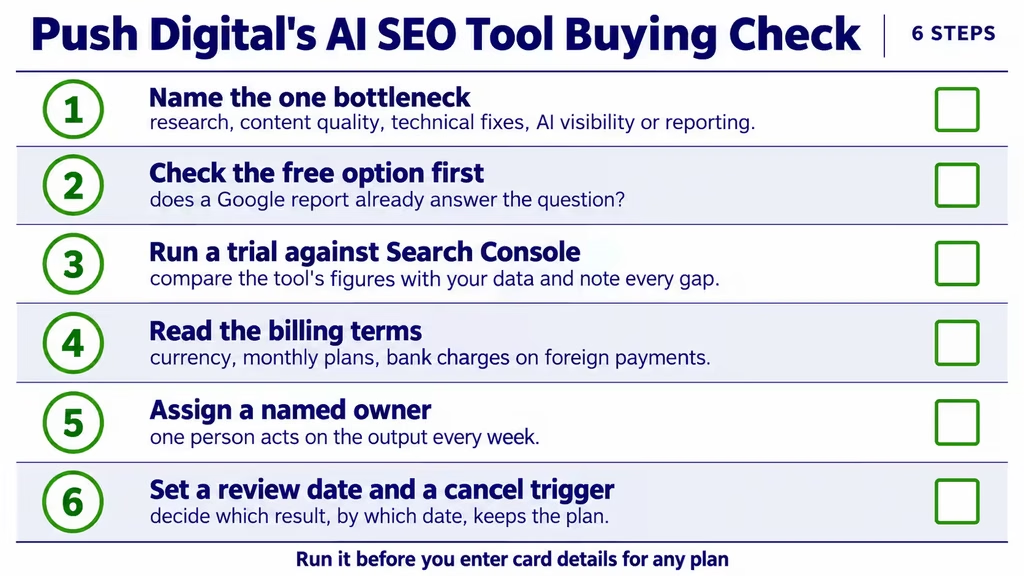
Push Digital’s AI SEO Tool Buying Check is a six-step method for deciding whether to buy a tool, which one to buy, and when to stop paying. Run it before you enter card details for any plan.
- Name the one bottleneck. Pick research, content quality, technical fixes, AI visibility or reporting. If you name two, you are not ready to choose.
- Check the free option first. Ask whether a Google report already answers the question. If it does, a paid tool can wait.
- Run a trial against Search Console. Compare the tool’s figures for your own site with your Search Console data, and note every gap.
- Read the billing terms. Confirm the currency, whether monthly plans exist, and what your bank charges on foreign payments.
- Assign a named owner. One person must act on the tool’s output every week, or the subscription will sit unused.
- Set a review date and a cancel trigger. Decide now which result, by which date, keeps the plan alive.
A four-week trial keeps the check honest. In week one, export your Search Console queries and pages as a baseline. In week two, connect the tool and let it run. In week three, list every mismatch between the tool and the baseline. In week four, decide using the trigger from step six, for example: cancel if no fix from the tool’s output has shipped by the review date.
The tools themselves fall into recognisable groups. Suites such as Semrush, Ahrefs and SE Ranking bundle research, audits and tracking. Content-focused tools such as Surfer SEO and Frase score drafts against pages that already rank. Crawlers such as Screaming Frog handle technical audits. Step one, not the brand name, tells you which group you need.
A common pattern with small teams: they buy a full suite for its keyword database, then use only the rank tracker. If rank tracking is the real bottleneck, a narrower and cheaper tool answers it. If nobody has time to act on the output, no plan of any size will help.
Why Tool Prices Do Not Match What You Pay in Rupees
A price listed in dollars is not the price that leaves your bank account. Most vendors bill in US dollars, so your bank applies its own exchange rate and may add a foreign transaction fee. Ask whether the vendor bills in rupees, whether tax is added at checkout, and whether monthly plans cost more per month than annual ones.
Published prices also disagree. Three roundups read for this guide list three different entry prices for the same Semrush plan, and their figures for Surfer SEO and Ahrefs differ as well. Plans get renamed, billing periods change, and some suites sell AI visibility tracking as an add-on to the base plan. Read the vendor’s own pricing page on the day you buy.
Rupee figures do appear in local roundups. Searches for “AI SEO tools price in India” turn them up, but the ones we saw did not say which plan, currency or billing period they used. Owners weighing AI SEO tools for small business often compare plans by headline price, and that number is rarely the one that leaves the bank.
The headline price is only part of the cost. Some plans cap the number of tracked keywords, crawled pages, users or projects, and a small business that outgrows a cap is pushed to the next tier. The largest hidden cost is time. A tool that produces recommendations nobody has time to act on costs the subscription fee plus the hours spent reading its reports.
Set a monthly ceiling in rupees before any trial of AI SEO tools for small business in India starts. Convert each plan at the rate your bank charges, add any add-ons, and compare the total with the ceiling. Put the trial end date in your calendar, because a forgotten trial becomes a paid month.
Chennai and Tamil Nadu: Where Generic Tool Advice Breaks Down
Think of a neighbourhood clinic that publishes appointment pages in Tamil and English. A tool built around English search results can score the English page and say little about the Tamil one. The clinic ends up tuning the page the tool can read and neglecting the page many of its patients actually use.
Local search behaviour is where a human still outperforms a dashboard. Push Digital has been building brands out of Chennai for more than 25 years. The checks below suit any Chennai or Tamil Nadu business, whichever vendor it considers.
Run four checks when you trial AI SEO tools for small business in India:
- Language: search the same topic in Tamil, English and Tanglish, then see whether the tool returns data and suggestions for each
- Region: confirm the AI visibility tracker can be set to India, not only to global or US results
- Seasonality: keyword tools report average monthly searches, which flattens the spikes around Pongal, Deepavali and the wedding season
- Local listing: Google says Business Profile details can help local businesses appear in Search and AI responses, so a tool that ignores them covers only part of local search
Enquiries also arrive through channels a search tool never sees. Many small businesses in Tamil Nadu take orders and bookings on WhatsApp or by phone, so a rise in Search Console clicks may not show up as a rise in form fills. Ask each new customer how they found you, and record the answer next to your tool’s data. That habit shows whether ranking gains turn into customers.
The same test applies to AI SEO tools for Chennai businesses of any size: does the tool understand how your customers search? Good digital marketing for Chennai businesses connects the listing, the website and the content, and no single subscription does all three.
How Do You Check Whether an AI SEO Tool Is Accurate?

Compare the tool’s numbers for your own site with Google Search Console during a trial, and write down the gap you will accept before you start. Search Console reports data directly from Google Search, so it is the benchmark. A tool that cannot be reconciled with it should not drive spending.
Google’s guidance on evaluating third-party SEO tools and advice sets the ground rules. Google does not evaluate third-party services, and third-party tools cannot access its internal ranking data or guarantee performance. Any prediction a tool makes is its own. The same page says good advice either labels its claims as opinion based on data or experience, or cites official Google guidance. Apply that filter to vendor blogs as well as vendor dashboards.
Three tests catch most problems when you trial AI SEO tools for small business in India:
- Traffic and click figures: compare the tool’s estimates for your own site with Search Console, then note the gap
- Content scores: a score shows how closely a draft resembles pages already ranking, not whether it is useful, so a page can score well and still lose ground
- AI search visibility tracking: repeat the same prompts weekly and change one variable at a time, because wording, region and live-search settings all shift the answer
Check what a tool measures before you trust its label. A visibility score from an AI tracker counts mentions in AI answers. It does not measure Google rankings, and a content score does not measure traffic. Confusing the two leads owners to celebrate a number that has no link to enquiries.
Consider a manufacturer in Guindy or Ambattur whose audit tool produces a long list of fixes that nobody owns. The audit is accurate and the site still does not improve. Sort the list by likely impact, give each fix an owner and a date, and crawl again once the work is done to confirm the fixes held.
Where Google Draws the Line on AI-Written Content
Google does not ban AI-assisted content, and it does not reward it either. It judges the page. Owners often type “does Google penalize AI content” into a search bar, and the answer has two parts.
First, Google’s guidance on generative AI content says the technology can help with researching a topic and adding structure to original content. Second, the same page warns that generating many pages without adding value for users may violate the scaled content abuse spam policy. The line is drawn at value to readers, not at the tool.
Two practical rules follow. Publish an AI-assisted page only when a person with real knowledge of the topic has added something the model could not, such as a first-hand detail, a local fact or a decision. That matches what E-E-A-T, Google’s quality framework, asks for: experience, expertise, authoritativeness and trust. Then check accuracy everywhere, including title tags, meta descriptions, structured data and image alt text, which Google’s guidance names as places where accuracy matters.
For the T. Nagar showroom in the earlier example, that means real fabric photographs, the care instructions staff give customers every week, and prices for the current season. A model can draft the structure around that material. It cannot invent the material.
Google also suggests telling readers how automation was used where that suits the audience, and a short note on how a page was made costs nothing. Among AI SEO tools for small business in India, any that sells bulk publishing of AI-written pages deserves a hard look against the scaled content abuse policy before it gets a trial.
Conclusion
The safest way to buy AI SEO tools for small business in India is in order, one bottleneck at a time. Set up Google’s free reports, then let a single trial prove itself against Search Console. Vendors will keep promising rankings, and only your own data shows whether a tool earned its fee.
This week, open Search Console and export the last three months of queries and pages. If the export shows steady impressions but few clicks, titles and descriptions may need work before any subscription does. Write down the one problem you would pay to solve, then run the six-step buying check on one tool before any card details go in. If you want a second opinion on which problem to tackle first, talk to our brand team. Bring your export, and the conversation starts from your own data.
Frequently Asked Questions
Can a small business in India do AI SEO without an agency?
Yes, for research, audits and tracking, since free Google reports cover most of it. Site fixes, content strategy and local search setup still need someone who knows the business.
Do AI SEO tools actually improve Google rankings?
Not by themselves. Google says no third-party tool has access to its ranking systems or can guarantee performance, so the gain comes from the fixes a tool helps you find.
Does Google penalize AI content?
Not for using AI as such. Google’s guidance warns that generating many pages without adding value for users may breach its scaled content abuse policy, so originality and accuracy matter.
Semrush vs Surfer SEO for small business: which is better?
Choose Semrush for a broad suite, or Surfer SEO if scoring drafts against ranking pages is your main need. Test either against Search Console first.
Can ChatGPT help with SEO?
Yes, for outlines, meta descriptions and question ideas. It cannot see your Search Console data unless you connect it, so verify every number and fact before publishing.
Does my website need an llms.txt file?
Not for Google Search, which does not use llms.txt files according to its own optimisation guide. Adding one is harmless, but it will not move Google rankings.