
Table of Contents
A Chennai retailer we spoke with recently had spent four months waiting on a “custom” website that still had no launch date. Meanwhile, a competitor two streets over had a working WordPress site live in three weeks and was already collecting enquiries. Neither business made the wrong choice in principle. One made the wrong choice for their stage. The WordPress vs custom website decision is not about which platform is better. It is about which platform matches what your business actually needs to do this year, not what sounds more impressive in a pitch meeting.
This comes up constantly with businesses in Chennai and across Tamil Nadu launching their first real website or replacing one that has stopped keeping up with the brand. Push Digital has been building brands out of Chennai for more than 25 years, and the platform question shows up early in nearly every web project, often before the client finishes briefing the design.
Every agency proposal frames WordPress vs custom website as a technical debate about code quality, when it’s closer to a resourcing decision: what timeline can the business tolerate, and what does the site need to do beyond looking credible. This article works through that decision the way we would with a client across the table.
The Real Question Behind WordPress vs Custom Website
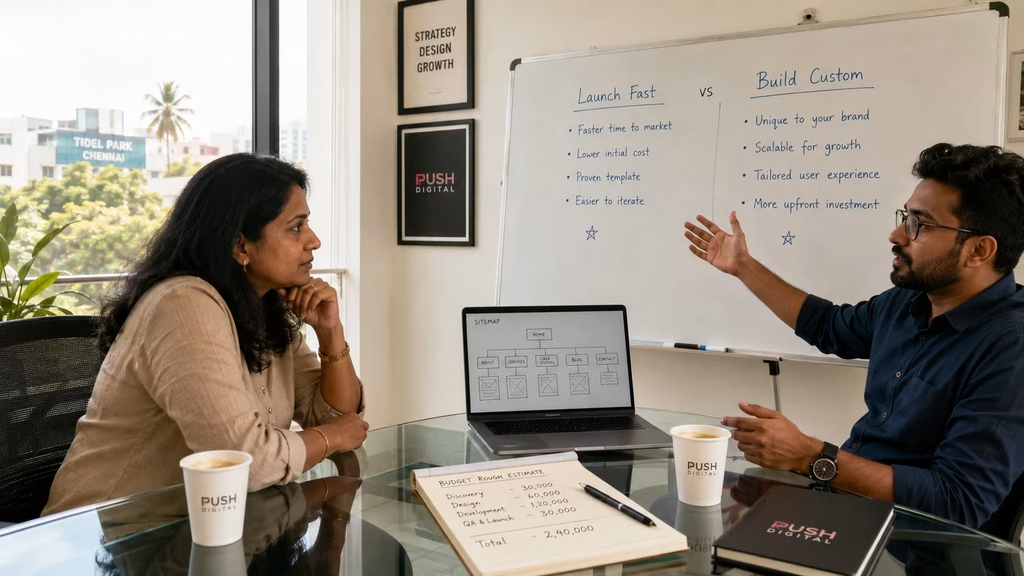
The WordPress vs custom website question is really three questions wearing one costume: how fast you need to launch, how much control you need over unique functionality, and how much budget you can commit before the site earns its keep. WordPress answers the first two with speed and plugin flexibility. A custom build answers the third with a codebase designed around one specific business, not a general-purpose platform.
Most businesses skip straight to “which is better” and miss that the comparison is situational. A five-page brochure site for a design studio and a booking platform for a multi-location clinic are not the same problem, even though both get filed under “we need a website.” Owners who ask the better-platform question get a vague answer. Owners who ask what their next twelve months actually require get a useful one.
Not X, but Y framing helps here: this is not a technology decision first. It is a business-stage decision that happens to have a technology outcome. Once the stage is clear, the platform choice tends to answer itself, which is exactly what the rest of this article works through section by section.
A pattern that repeats across client conversations: the business that asks “which platform is better” tends to outgrow its own launch within eighteen months, because the question skipped past what the business was actually trying to accomplish. The business that asks “what does my next year require” almost always lands on the right platform unprompted. WordPress vs custom website stops being a hard question once the actual requirements are written down instead of assumed.
What WordPress Actually Gives You
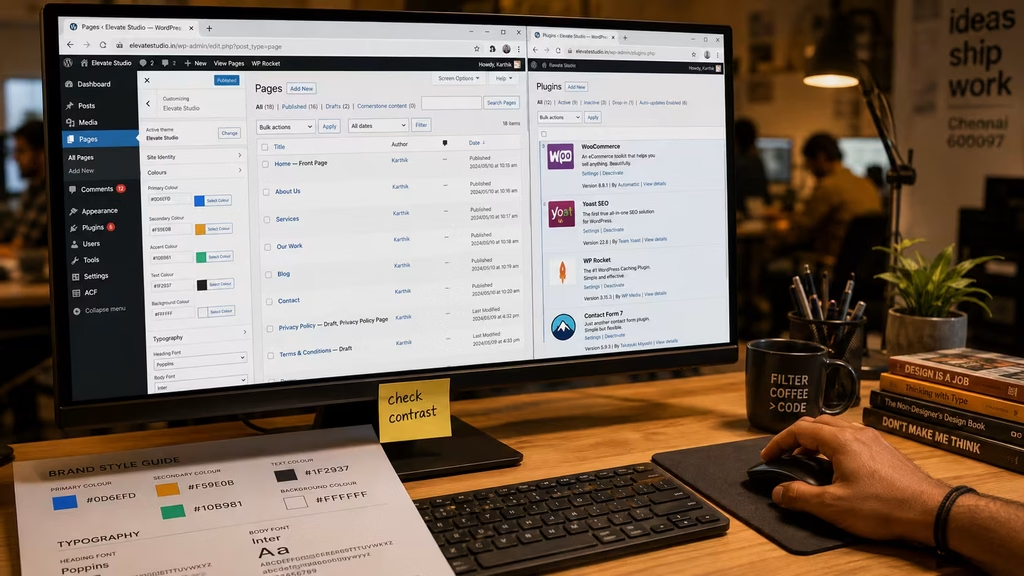
WordPress is an open-source content management system that lets a business launch a functional website using pre-built themes and plugins rather than custom code, and it remains the most widely used platform of its kind for standard business sites. On the WordPress side of the WordPress vs custom website equation, a small or mid-size business gets a working site in weeks rather than months, at a fraction of custom development cost, with an editing interface the internal team can use without calling a developer for every text change.
That speed comes from a large plugin ecosystem: WooCommerce for online stores, Yoast or RankMath for SEO structure, and dozens of form and booking plugins that would otherwise need to be built from scratch. WordPress vs custom website development debates often frame plugins as a weakness, but for standard functionality, contact forms, a blog, a product catalogue, reusing proven plugin code is faster and cheaper than reinventing it.
The trade-off shows up at scale. Stack enough plugins on a single WordPress install and you introduce update conflicts, slower page loads, and a growing list of things that can break during a routine update. Google’s Search Central documentation on Core Web Vitals makes clear that page experience metrics factor into ranking, and an over-plugged WordPress site is the most common way a business quietly loses that ground without noticing.
Picture a local clinic running WordPress with twelve active plugins, most installed for a single feature used once. Page load creeps past four seconds, the booking plugin conflicts with the SEO plugin after an untested update, and the front desk fields calls from patients who gave up booking online. None of that is a WordPress problem. It’s a maintenance problem WordPress makes easy to accumulate, which is why WordPress vs custom website has to weigh who keeps the site running, not just who builds it.
What a Custom Build Actually Gives You
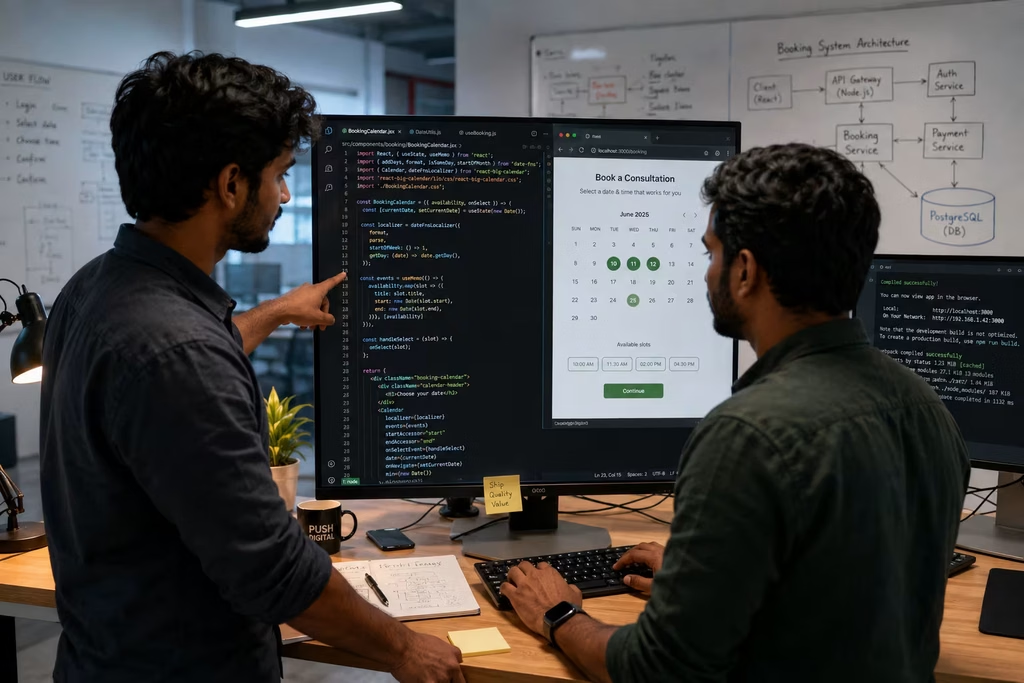
A custom website is built from the ground up using a specific framework, commonly React, Laravel, or Node.js, with every feature written for one business rather than adapted from a template. It gives a business complete design flexibility, a smaller attack surface with no third-party plugin stack to exploit, and the ability to build workflows a template platform was never designed for, like a live inventory sync or a custom client portal.
The honest cost of that flexibility is time and money. Custom builds typically run into months rather than weeks, and every future feature request goes through a developer rather than a plugin install. In the WordPress vs custom website trade-off, this is the right choice for a business whose website functions as the product itself, a booking engine or a SaaS dashboard, rather than a brochure that happens to live online.
Push Digital’s web design and development work covers both paths, and the honest answer for most first-time clients is that a custom build only earns its cost once the functionality genuinely cannot be achieved with a well-configured plugin stack. Building custom because it sounds more premium, without a functional reason, is a costly mistake we see repeated across sectors.
What This Looks Like for Chennai and Tamil Nadu Businesses
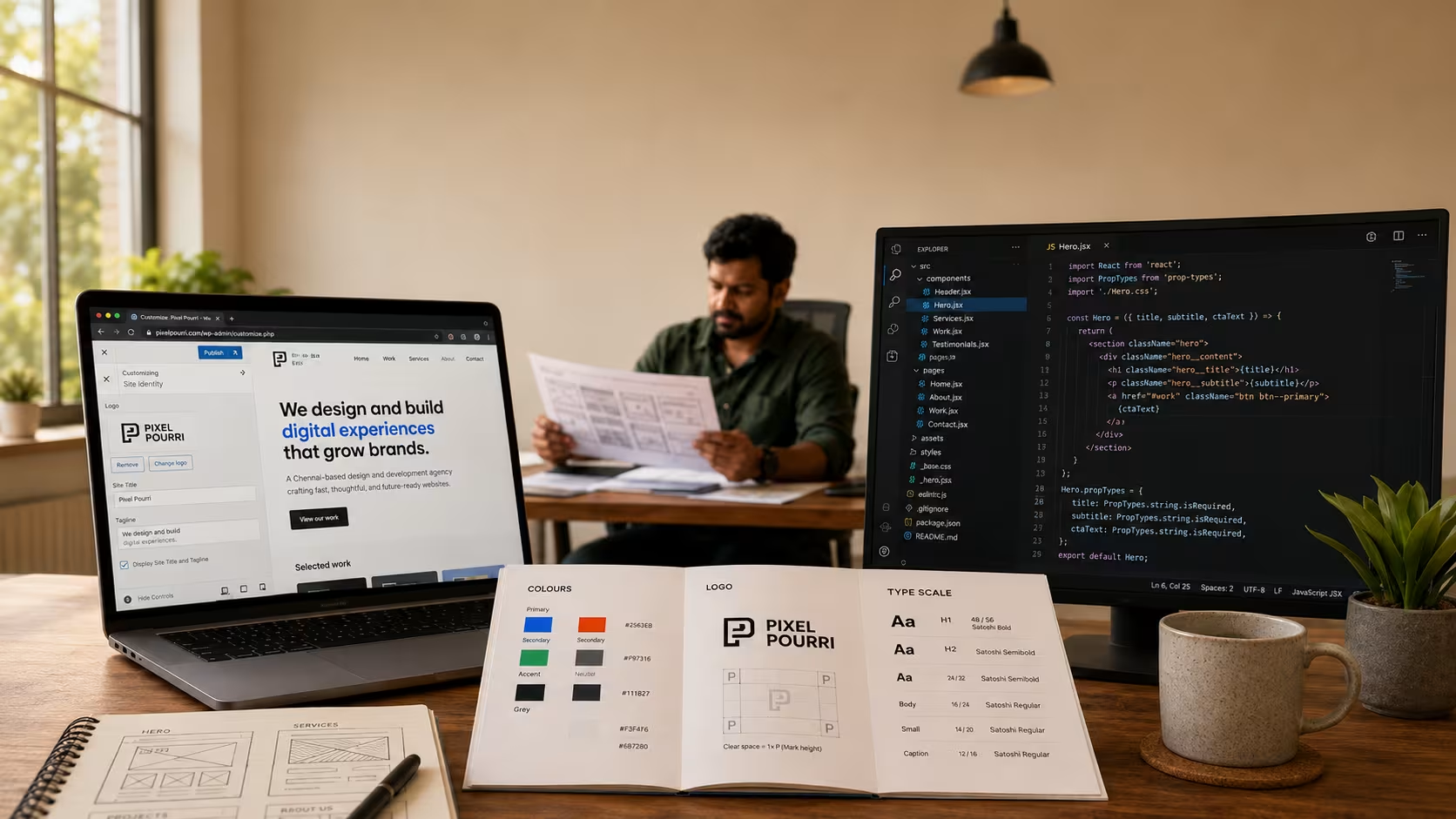
For a Chennai business, the platform question is rarely separate from the brand question. A brand identity system built for a rebrand, logo, colour values, type scale, usage rules, has to translate onto whichever platform gets chosen, and that translation is where inconsistency creeps in. A WordPress theme customised without the actual HEX values from the style guide drifts from the brand within two page updates.
Tamil Nadu’s SMB and D2C businesses lean toward fast-launching companies: a retailer testing an online catalogue, a service provider building local search visibility, a manufacturer needing a credible presence before a trade show. For most of these, in the WordPress vs custom website decision, WordPress with a locked-down plugin list gets the brand online without the four-to-six month runway a custom build requires.
Where a Chennai business genuinely needs custom development is when the website has to do something structurally unusual: a manufacturer with a live dealer portal, a service business with a proprietary booking and payment flow no plugin covers cleanly. In those cases the timeline cost is worth paying because no WordPress plugin stack replicates it reliably.
Consider a growing D2C brand that started on a templated WordPress store three years ago and has since expanded past 200 SKUs with regional pricing tiers. The plugin stack that worked at 40 products buckles under the catalogue complexity, and every workaround adds fragility. That business is not weighing WordPress vs custom website in the abstract anymore. It has outgrown the platform it started on, and the honest conversation is migration planning, not a fresh comparison chart.
Where the Cost Numbers Actually Come From
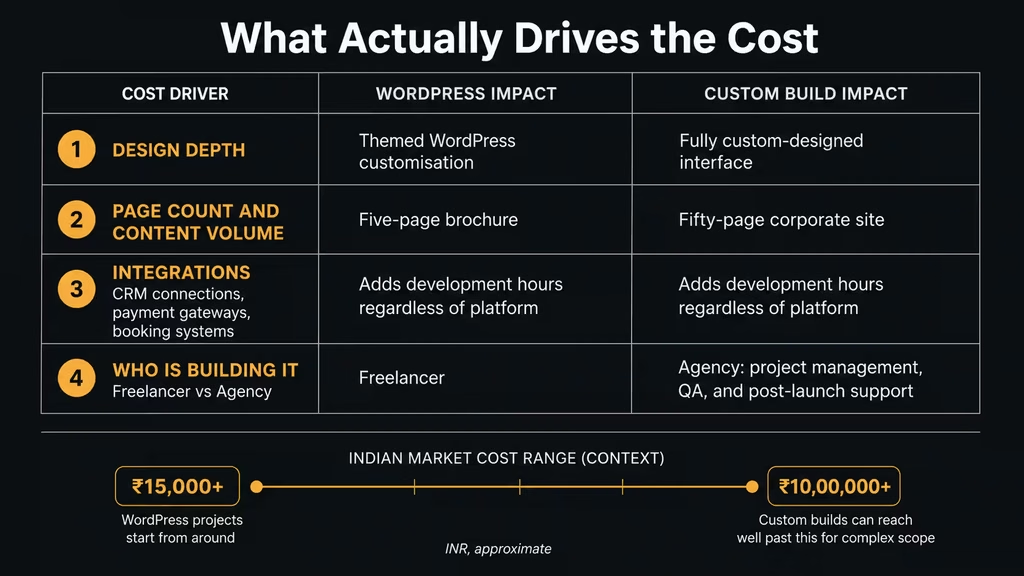
Quoted prices for both platforms vary widely across Indian agencies, from roughly ₹15,000 for a basic WordPress site to figures well past ₹10,00,000 for a complex custom build, and the range itself is the useful information: it tells you the number is driven by scope, not by which side of the WordPress vs custom website line the project falls on. Four factors move the number more than anything else.
Design depth is the first: a themed WordPress site with brand customisation costs meaningfully less than a fully custom-designed interface, whether that interface is built in WordPress or from scratch. Page count is the second, since a 50-page corporate site with case studies takes a fraction of the effort of a five-page brochure regardless of platform. Integrations are the third: CRM connections, payment gateways, and booking systems each add development hours whether they arrive as a plugin configuration or custom-coded API work.
The fourth factor is who is doing the building. A freelancer and an agency can quote very differently for the identical scope, and the gap usually maps to project management, QA, and post-launch support rather than the code itself. Businesses comparing quotes should ask what is included in each number before assuming the cheaper one is the better deal.
This is where a WordPress vs custom website comparison gets misleading if you only look at the headline number. Two quotes that both say “WordPress website” can differ by ten times depending on whether one includes a custom-designed interface and post-launch support, or is just a theme with the logo swapped in. The same applies on the custom side: a quote with proper discovery and QA in a staging environment is not comparable to one that skips straight to code. Ask for a line-item breakdown before trusting any single figure.
Mistakes Businesses Make Choosing Between Them
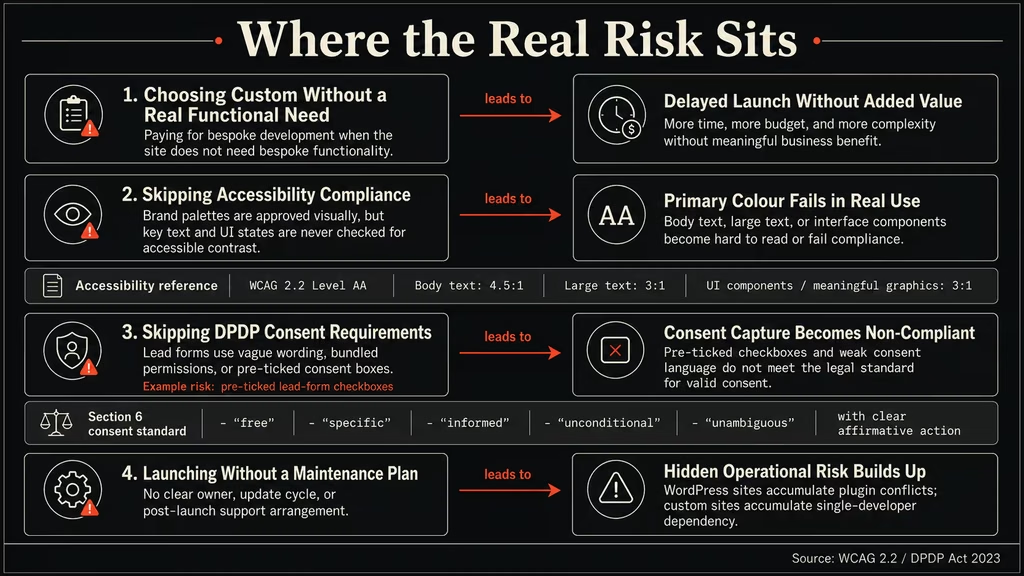
Businesses working through WordPress vs custom website usually make one of four mistakes. The most common is choosing custom development because it sounds more serious, without a functional requirement WordPress genuinely cannot meet. A five-page service site with a contact form does not need a fully custom-coded build, and paying for one delays launch without adding value.
The second mistake gets missed even more often: accessibility and data-consent compliance. WCAG 2.2 Level AA requires a contrast ratio of at least 4.5:1 for body text and 3:1 for large text and interface components, and plenty of brand palettes fail this on their primary colour once it lands on a website background. This check belongs in the identity stage, before the palette is signed off, not after the site is built.
The consent side matters just as much. India’s Digital Personal Data Protection Act, 2023 requires consent for processing personal data to be free, specific, informed, unconditional, and unambiguous, given through a clear affirmative action. A pre-ticked newsletter checkbox on either a WordPress or custom-built enquiry form does not meet that bar, and it’s a compliance gap almost no proposal mentions upfront.
A third pattern repeats across both platforms: launching without a plan for who updates the site after handover. WordPress sites left unmaintained accumulate plugin conflicts. Custom sites left unmaintained accumulate a dependency on whichever developer built them. Neither problem is platform-specific; both come from treating launch as the finish line instead of the start of ongoing upkeep.
A fourth mistake sits specifically on the custom side: treating “custom” as a synonym for “premium” and skipping the discovery phase that makes custom development worth its cost. A custom build without proper wireframing and UX planning upfront becomes an expensive, slower template site, minus the plugin ecosystem that would have made routine functionality faster to add. The value of custom development comes from the planning discipline behind it, not the absence of a CMS WordPress vs custom website .
A Simple Way to Decide
Not X, but Y: the decision is not WordPress versus custom in the abstract, it is your next twelve months of business needs versus each platform’s actual strengths. Work through it in this order.
- List the functionality the site must support beyond content pages: booking, payment, custom dashboards, integrations
- Check whether a well-reviewed plugin covers each item, rather than assuming it needs custom code
- Estimate how often the content or catalogue will change and who on the team will make those changes
- Set a realistic launch deadline tied to an actual business event, not an arbitrary date
- Match the answer to the platform: standard content with a near-term deadline favours WordPress; unique workflows with room in the timeline favour custom
| Business Situation | Better Fit | Why |
|---|---|---|
| First website, standard service pages, contact form | WordPress | Fast launch, low upfront cost, internal team can edit content |
| Online store with standard catalogue and payment gateway | WordPress with WooCommerce | Plugin ecosystem covers the requirement without custom code |
| Proprietary booking, dealer portal, or client dashboard | Custom | No plugin replicates the workflow reliably |
| High-traffic content site expecting rapid scale | Custom or optimised WordPress | Depends whether the bottleneck is content volume or unique features |
Most businesses discover the answer by the third row, not the first. If it’s still unclear, that conversation is worth having with a team that builds both, not one that only sells the platform they specialise in. You can talk to our team about which path fits your scope before committing budget either way, WordPress vs custom website .
Conclusion
WordPress vs custom website is not a question with a universally correct answer, and any agency that gives you one without asking about your business first is selling you their preferred stack, not your solution. WordPress fits most Chennai and Tamil Nadu businesses launching a first site or replacing an outdated one, because speed, cost, and content control matter more than flexibility at that stage. Custom development earns its higher cost only when the site has to do something a plugin genuinely cannot.
This week, list the functionality your next website has to support, and check it against what a properly configured WordPress plugin stack already covers before assuming you need a custom build. If the list points toward genuinely unique workflows, that’s worth a proper scoping conversation. Push Digital’s branding and web design work starts with exactly that conversation, so the platform decision gets made on your business needs, not on which option sounds more impressive in a proposal.
Frequently Asked Questions
Is WordPress good enough for a small business website?
Yes, for most small business needs: service pages, a blog, a contact form, and a product catalogue. It becomes a weaker fit once functionality moves beyond what plugins reliably support.
How much does a custom website cost compared to WordPress in India?
In the WordPress vs custom website comparison, custom builds cost several times more than WordPress for equivalent scope. The gap comes from design and development hours, not the platform itself.
Can I switch from WordPress to a custom website later?
Yes, many businesses start on WordPress and migrate once requirements outgrow it. Content can usually be carried over, but design and functionality typically need rebuilding from scratch.
Which is better for SEO, WordPress or custom code?
Both can rank well. WordPress offers SEO plugins for easier setup, while custom code gives full control over technical elements like site speed and schema markup.
Do I need a developer to maintain a WordPress site?
Not for routine content updates, but plugin conflicts, security patches, and performance issues usually need developer attention. Budget for at least basic ongoing maintenance and periodic check-ins.
Is WordPress secure enough for a business website?
Yes, when kept updated and configured properly. Most WordPress security incidents trace back to outdated plugins or weak hosting, not a flaw in the platform itself.