

Table of Contents
A Chennai packaging brand once briefed an agency for “an explainer video” and received a quote for full 3D character animation, nearly three times the budget the team had in mind. The mismatch was not the agency’s fault. It was a vocabulary gap that shows up in almost every first video conversation between a marketing team and a production partner. Business owners rarely know there are several distinct types of animated videos, each built for a different job, budget, and platform.
Picking blindly means picking expensively. A 3D product demo built for a landing page rarely survives being cut down for a 15-second Reel. A whiteboard video meant to teach a complex process falls flat as a paid social ad. Getting the type right before the brief goes out saves rework, saves budget, and keeps a finished video from arriving at a platform it was never built for.
This piece breaks down five types of animated videos business owners actually commission: 2D animation, motion graphics, whiteboard animation, 3D animation, and mixed media. Each section covers what the format is good at, where it struggles, and where it tends to show up in a real marketing calendar in India.
Why Picking the Wrong Animation Style Costs Brands More Than Money
Choosing among the types of animated videos without matching format to platform is the most common costly mistake brands make. A 3D character built for a homepage explainer rarely survives a vertical Reels cut, and a whiteboard video paced for teaching underperforms as a six-second scroll-stopper. The mismatch usually surfaces only after production is already finished.
Most business owners start the brief with a look they like rather than the job the video needs to do. That instinct is understandable, and it is also how budgets get wasted. A style chosen because it looked good on a competitor’s website often has no relationship to the platform, length, or attention span the actual campaign requires.
Picture a brand launching a polished 3D product demo built for a landing page, then trying to repurpose the same footage for Instagram Reels, where most viewers decide whether to keep watching within the first three seconds. Think with Google’s research on mobile video attention points to exactly this pattern: mobile viewing behavior is shaped by fast, early attention decisions, which is why a video paced for a desktop landing page rarely survives unchanged on a vertical feed. The video gets reworked, sometimes reshot, and a four-week timeline stretches past eight.
Push Digital has been building brands out of Chennai for more than 25 years, and the pattern that repeats across video briefs is the one in this scenario: the format gets locked in before the platform and message are settled, and the rework that follows costs more than the extra week it would have taken to sequence the brief properly.
Learning the types of animated videos available before the brief goes out is what prevents this cycle. The fix is sequencing, not talent. Defining the platform, the length, and the core message before touching a style reference removes most of the guesswork behind a wrong first choice, and it is the single decision that separates a video that performs from one that gets quietly retired after a month.
2D Animation: The Default Starting Point for Most Brands
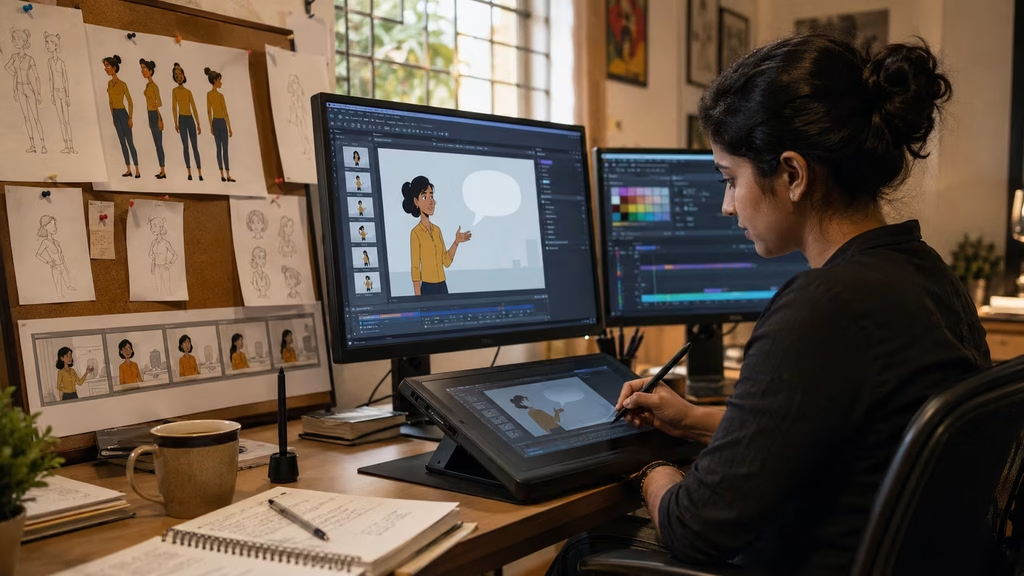
2D animation uses flat, two-dimensional graphics and characters, and it remains the most common of the types of animated videos commissioned for business use. It works through illustrated scenes, simple character rigs, and scripted narration, and it scales cleanly from a 90-second landing page video down to a 15-second social cutdown without losing visual coherence.
The format earns its popularity from cost and flexibility, not novelty. A 2D explainer can carry a complex product story through characters and metaphor without needing a physical set, real actors, or location shoots. That makes it the fastest style to revise mid-production: a script change usually means adjusting illustrated scenes, not reshooting footage.
2D animation is particularly effective when a brand needs to explain an abstract service, such as a fintech product or a software workflow, where there is nothing physical to film. It also holds up well across the multiple aspect ratios a modern campaign needs: a single 2D asset can be reformatted for a website hero, a square social post, and a vertical story with far less rework than a live-action shoot would require.
Where 2D animation struggles is realism. A brand selling a physical, tactile product or industrial machinery tends to look flatter and less convincing in 2D than in 3D or live footage. Of all the types of animated videos covered here, 2D works best as a supporting explainer for those categories, not the flagship product video.
Motion Graphics: When the Message Is the Data, Not a Character
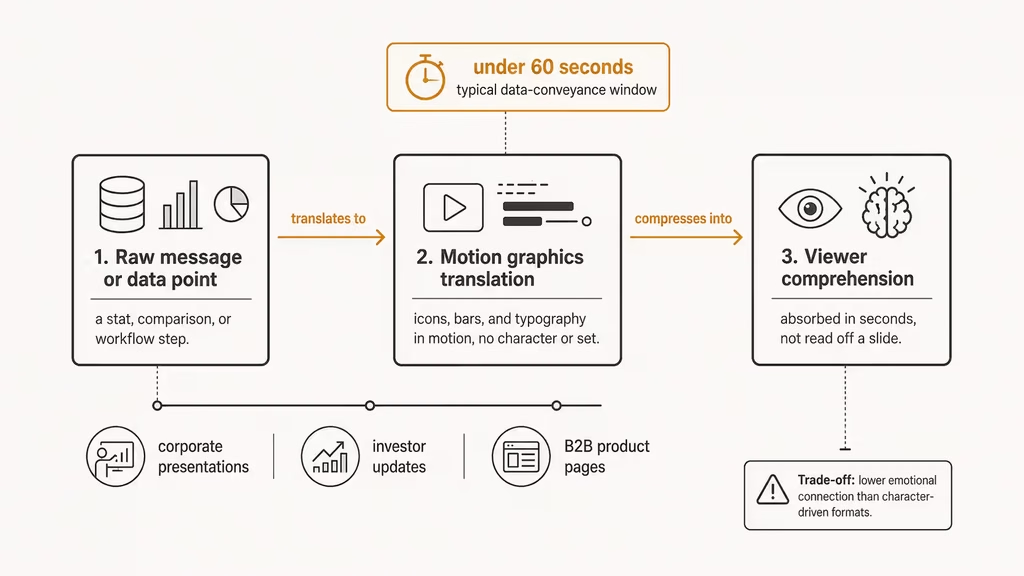
Motion graphics animate text, icons, charts, and shapes rather than characters, and this format sits among the types of animated videos best suited to data-heavy or process-heavy messaging. A motion graphics video can turn a quarterly stat, a comparison table, or a step-by-step workflow into something a viewer absorbs in seconds rather than reading off a slide.
The format’s strength is clarity under time pressure. Corporate presentations and B2B product pages often need to convey several data points in under 60 seconds, and motion graphics compress that into visual rhythm: numbers count up, bars grow, and icons swap in sync with narration, without needing a character or a set.
Motion graphics is also the most budget-efficient of the five types for brands producing frequent, shorter-form content. Because there is no character rigging or complex scene design, a motion graphics template can often be adapted for multiple campaigns once the core visual system is built, which shortens turnaround for repeat requests.
The trade-off is emotional connection. Motion graphics rarely builds the kind of character-driven story that makes a viewer feel something about a brand. It communicates information cleanly, but a brand trying to build an emotional narrative, such as a founder story or a customer testimonial, usually needs a format with people or characters in it instead.
Whiteboard Animation: Built for Teaching, Not Selling

Whiteboard animation simulates a hand drawing illustrations and text on a plain background as narration plays, and among the types of animated videos, it is the one most closely associated with education rather than persuasion. The drawn-in-real-time effect mimics a classroom explanation, which is exactly why it performs well for training and onboarding content.
The format’s core strength is sequencing. Because each element appears to be drawn as the narration reaches it, whiteboard animation naturally paces a viewer through a multi-step process, a workflow, a policy explanation, or a technical concept that needs to build in order. Healthcare providers and educational institutions use it heavily for this reason.
Picture a healthcare or ed-tech brand trying to explain a multi-step process, where a whiteboard video’s drawn-out pacing works against it inside a 15-second attention window on social media. That is the format’s clearest limitation: whiteboard animation is built for patience, and most paid social placements are built for the opposite. A whiteboard video edited down to six seconds loses the drawing effect that makes it work in the first place.
Whiteboard animation is also the least visually distinctive of the five types, since most whiteboard videos share a similar hand-drawn look regardless of production studio. Brands with a strong existing visual identity system, defined colors, typography, and illustration style often find whiteboard animation harder to make feel genuinely on-brand compared with a fully custom 2D or motion graphics production.
3D Animation: Depth and Realism, at a Different Budget
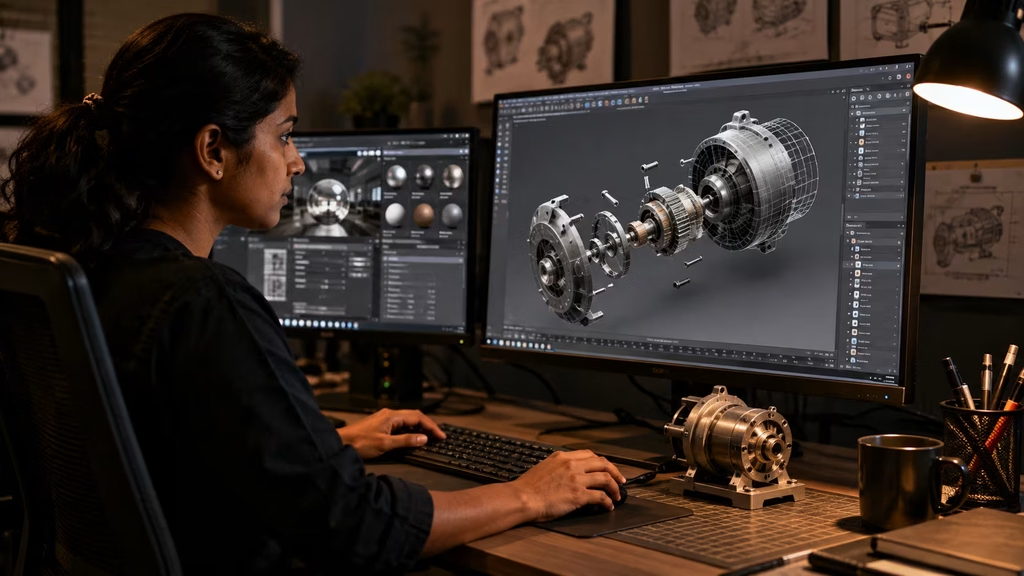
3D animation builds fully rendered, computer-generated environments and objects, and of the types of animated videos covered here, it carries both the highest production complexity and the strongest sense of physical realism. It is the format of choice when a product’s shape, texture, or internal mechanism is the actual selling point.
The format excels at showing what cannot be filmed easily or affordably: an exploded product view revealing internal components, an architectural walkthrough of a space that does not exist yet, or a manufacturing process too dangerous or expensive to shoot on location. Automotive, industrial equipment, and medical device brands lean on 3D animation for precisely this reason, since Chennai’s own manufacturing corridor produces exactly this kind of technical product.
3D animation also demands the longest production timeline of the five types, since modeling, texturing, lighting, and rendering each add distinct stages that 2D and motion graphics do not require. A brand working toward a fixed launch date needs to lock the 3D brief earlier to leave enough runway for revisions.
The honest limitation is cost relative to output. A 3D video communicating a message that 2D animation could carry just as clearly is usually the more expensive way to say the same thing. 3D earns its budget when realism itself is the message, not as a default upgrade for brands wanting a more premium look. Browsing Push Digital’s video and animation portfolio is a useful gut check before committing to 3D: if the product story reads just as clearly in a 2D reference reel, the extra budget is better spent elsewhere.
Mixed Media: Blending Live Footage with Animated Elements

Mixed media animation combines real, filmed footage with animated overlays, and among the types of animated videos, it is the format that most directly connects a brand’s real people, products, or spaces to illustrated or motion graphics elements layered on top. A product shot on camera might get an animated callout, a data overlay, or an illustrated character interacting with it.
The format works because it borrows credibility from live footage while keeping the flexibility of animation for anything that would be impractical or expensive to shoot directly, statistics, abstract concepts, or a process happening inside a product. A retail brand can film a real store environment and animate product benefits directly onto the footage, keeping the human, tactile feel of live action while still explaining features clearly.
Mixed media works particularly well for testimonial and case study content, where a real customer’s on-camera story carries more trust than an illustrated character would, while the surrounding data still benefits from an animated layer for clarity.
What Actually Drives Cost, Timeline, and the Right Choice for Chennai Brands
Cost across the types of animated videos is driven less by the software used and more by four repeatable factors: the animation style chosen, the length of the finished video, the number of stakeholder review rounds contracted, and whether the project needs custom character or environment design versus a reusable template system.
Style is the biggest single lever. A motion graphics video built from a reusable icon and typography system typically moves faster through production than a custom 2D character piece, and both move faster than a fully modeled 3D sequence, simply because each additional layer of custom asset design adds a production stage that has to be built, reviewed, and revised before animation even starts.
Length compounds every other factor. A 30-second social cutdown edited from an existing 90-second explainer is comparatively quick, but a video built natively for 30 seconds still needs a full script, storyboard, and voiceover pass, the same core stages a 90-second video requires, just compressed. Review rounds matter just as much: three structured review stages, concept, storyboard, and final animation, keep a project on schedule far more reliably than open-ended revision cycles.
| Animation Type | Best For | Typical Review Rounds | Common Platform Placement |
|---|---|---|---|
| 2D animation | Abstract products, software, services | 3 | Website, landing page, YouTube |
| Motion graphics | Data, stats, corporate presentations | 2 | LinkedIn, investor decks |
| Whiteboard animation | Training, step-by-step education | 3 | Internal training, e-learning |
| 3D animation | Physical products, technical detail | 4 | Product pages, trade shows |
| Mixed media | Testimonials, retail, case studies | 3 | Instagram, paid social ads |
For Chennai and Tamil Nadu brands specifically, platform placement matters as much as style. A brand advertising on Meta or Instagram needs to plan for vertical framing and sub-10-second hooks from the storyboard stage, not as an afterthought edit. And any claim made inside the video itself, a stated benefit, a comparison, or a performance figure still falls under ASCI’s Code for Self-Regulation of Advertising Content, which requires that objective claims be capable of substantiation regardless of whether they are spoken, animated, or written on screen.
Businesses weighing a bigger 3D or mixed media commitment should start by defining the platform and the claim being made, then choose the type that carries that claim clearly, rather than starting from a style they liked on someone else’s website.
Push Digital’s animated explainer video production process starts with exactly that conversation, sorting out the platform and the message before a single style reference gets discussed.
Conclusion
Working through the types of animated videos available before writing a brief is what separates a video that gets used for years from one that gets quietly shelved after a single campaign. 2D animation, motion graphics, whiteboard animation, 3D animation, and mixed media each solve a different problem, and none of them is a universal upgrade over the others.
This week, before commissioning anything, write down the platform the video needs to run on, the length that platform actually supports, and the one claim or idea the video has to communicate. That single exercise will point toward the right type faster than browsing a portfolio ever will.
Ready to figure out which format fits your next campaign? Start a project with Push Digital’s video team and work through the brief with people who build these videos for Chennai and India brands every week.
Frequently Asked Questions
What are the main types of animated videos for business?
The five most common types of animated videos are 2D animation, motion graphics, whiteboard animation, 3D animation, and mixed media. Each suits a different budget, message, and platform, from abstract software explainers to physical product demonstrations.
What is the difference between 2D and 3D animation?
2D animation uses flat, illustrated graphics, while 3D animation builds fully rendered, dimensional environments and objects. 3D communicates physical realism and texture more effectively, but typically costs more and takes longer to produce.
Which type of animated video is best for a small business?
Among the types of animated videos covered here, 2D animation or motion graphics usually suit small business budgets best, since both avoid the modelling and rendering stages that make 3D animation slower and costlier. The right choice still depends on the platform and message.
What is the difference between an explainer video and a motion graphics video?
An explainer video is defined by its purpose, introducing a product or service, and can be made in any animation style. Motion graphics is one specific style, built from animated text, icons, and data rather than characters.
How long should an animated brand video be?
Most animated brand videos run 60 to 90 seconds for a website or landing page, with shorter 15 to 30 second cutdowns for paid social placements. Length should follow the platform, not the story.
Is whiteboard animation still effective in 2026?
Whiteboard animation remains effective for training and step-by-step education, where its slower, sequential pacing supports learning. It performs less well on fast-scrolling social platforms where attention spans are shorter.