

Table of Contents
A Chennai apparel brand runs its first Google Ads campaign around a festival sale and sends every click straight to its homepage. Three days in, the click-through rate looks healthy, but sales sit close to zero. The ad promised 20% off the new festive collection. The homepage buries that offer three scrolls down, next to five other things the brand sells. This is the landing page vs website confusion in its rawest form: spending money to drive traffic, then handing that traffic a page built for browsing instead of buying. The decision is not really about which page type is better. It is about matching the page to the moment a visitor is in.
Key Takeaway: A landing page is a single, standalone page built around one action, while a website is a multi-page structure built for browsing, credibility, and long-term search visibility. Ad campaigns and specific offers call for a landing page. Ongoing discovery, trust building, and organic search growth call for a website. Most growing businesses eventually need both.
Why Businesses Confuse a Landing Page With a Website

The confusion starts with the word “page.” In a landing page vs website comparison, both are made of web pages, which makes them sound interchangeable. A website links many pages through one navigation menu, built for exploring several topics. A landing page is one disconnected page built to answer a single question.
Most first-time advertisers assume their website is the obvious destination for any campaign. It already exists, already has a domain, and already represents the brand. That instinct is not wrong, only incomplete. A website carries a homepage, a services page, an about page, and often a blog, each built for a different visitor at a different stage. None of those pages is built to answer one ad’s specific promise with zero distractions. The ad narrows a visitor’s intent to one thing, and the website widens it back out to everything the business offers.
Picture a Coimbatore-based B2B firm running a LinkedIn campaign for a free consultation offer. If that ad sends visitors to the firm’s general services page, they land among six other services and a contact form buried in the footer. Attention drops before the offer is even read. A single landing page built around that one consultation, with the offer repeated in the headline and one visible call to action, removes every one of those distractions. Tools such as Unbounce, Webflow, or a WordPress page builder can produce that page in days, not the weeks a full site update would take.
The mistake is rarely about design skill. Agencies frequently get called in after a client has spent weeks refining a homepage’s copy, only for the real fix to be a landing page vs website swap they could have made in a single afternoon. Recognising which format the traffic calls for, before opening a design tool, saves most of that wasted effort. It is the first question our web design and development team asks in any new campaign brief.
What Actually Separates the Two, Structurally
A landing page vs website comparison comes down to navigation and scope. A website links a homepage, an about page, service pages, and often a blog through a shared menu, built for exploring several questions at once. A landing page removes that menu entirely, keeping one headline, one offer, and one call to action.
| Factor | Landing Page | Website |
|---|---|---|
| Navigation | None, single page | Full menu, multiple pages |
| Primary goal | One conversion action | Multiple goals across pages |
| Typical traffic source | Paid ads, email, social campaigns | Organic search, direct visits, referrals |
| SEO role | Rarely ranks organically on its own | Primary asset for long-term organic ranking |
| Typical lifespan | Days to weeks, tied to one campaign | Months to years, ongoing |
The SEO row is where most business owners get surprised. Google Search Central’s guidance on multi-page site indexing explains why: a website earns ranking signals across dozens of interlinked pages over time, while a standalone landing page, often built on a separate subdomain, gives search engines almost nothing to crawl. A landing page can convert brilliantly and still rank nowhere. That is by design, not failure.
Website navigation exists because visitors arrive with different questions. Someone who typed the business name into Google wants something different from someone who clicked a specific festival-sale ad. A single-page vs multi-page structure decision follows from that difference in intent, not from which format looks more modern.
Analytics tools make the split visible too. Google Analytics 4 tracks a website’s multi-page sessions, page by page, across weeks or months. A landing page is usually measured on a single metric instead: the conversion rate for one page, over the life of one campaign. That narrower measurement is not a limitation, it is the point of building a landing page vs website comparison around a single goal in the first place.
Choosing Between Them for a Chennai or Tamil Nadu Campaign

For a Chennai or Tamil Nadu business, the landing page vs website decision usually turns on how the traffic arrives, not on the business’s size. A shop running a WhatsApp festival promotion needs a landing page with one WhatsApp CTA button. A manufacturer bidding for an industrial contract needs a full website instead.
That shop’s customer clicked an ad already knowing the offer, so a five-tab website menu just gets in the way on a small screen. The manufacturer’s buyer is different. A procurement officer wants a portfolio, certifications, and a contact page to browse before ever speaking to sales, and only a full website can hold all of that in one place without crowding out the offer a landing page exists to protect. The landing page vs website choice here is not about budget. It is about matching the page to the buyer’s stage.
Push Digital has been building brands out of Chennai for more than 25 years. The pattern that shows up across that work is consistent: businesses that treat every campaign as a website update, rather than commissioning a dedicated landing page per offer, spend more on ads to get the same number of leads. The fix is not always a bigger website. Often it is one well-scoped page per active campaign, sitting alongside the main website rather than replacing it.
Regional buyer behaviour matters here too. Tamil Nadu’s SMB audience skews heavily mobile-first, and a landing page with a single clear action loads faster and converts faster on a mid-range Android device than a full website homepage carrying a dozen scripts and a full product catalogue. That speed gap is often the difference between a festival campaign that pays for itself and one that does not.
The Mistake That Wastes the Most Ad Spend
The single most expensive mistake in the landing page vs website decision is sending paid traffic to a homepage built for browsing. Google’s Ads system scores every campaign partly on landing page relevance, and a mismatched destination page pushes that score down, raising the cost per click before a single conversion happens.
The fix costs less than the ads it protects: one dedicated page per offer. Google’s own Landing Page Experience guidance ties ad rank and cost to how closely the destination page matches the ad’s promise. A homepage promoting five services cannot match one specific offer as precisely as a page built only for that offer. Advertisers who skip this step often blame the platform when the real constraint was the page they sent people to.
The same logic holds on Meta. Meta Ads Manager reports a relevance and quality ranking for every ad, and a landing page vs website mismatch shows up there just as clearly as it does in Google Ads, usually as a rising cost per result within the first few days of a campaign.
This mistake compounds over a campaign’s lifetime. Every rupee spent on clicks that land on a mismatched page is a rupee spent teaching the ad platform that the campaign converts poorly, which then raises future costs for the same keywords. Fixing the destination page after three weeks of underperformance is far more expensive than scoping the correct page type before launch.
How to Decide: A Practical Framework
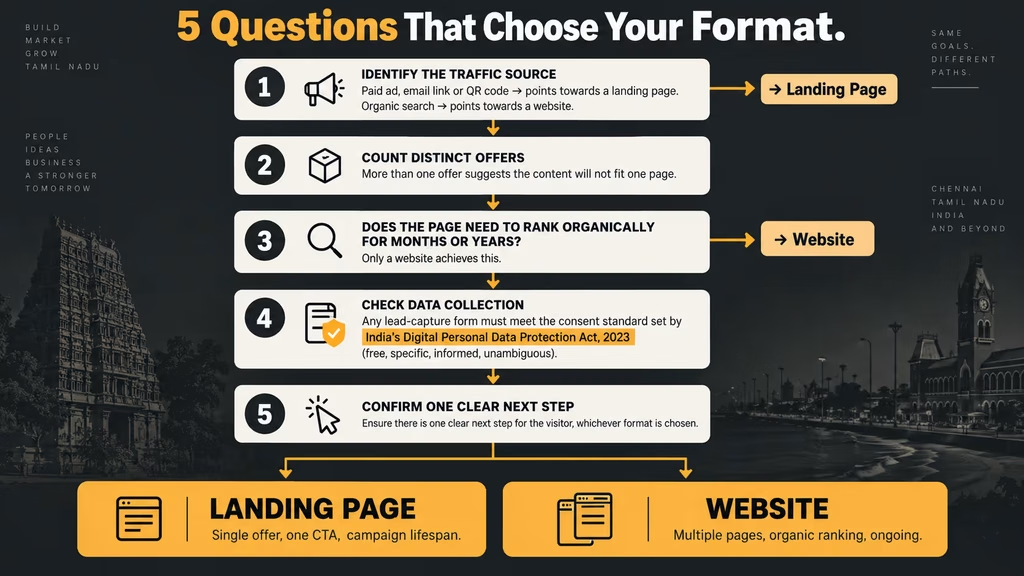
Deciding between a landing page vs website does not require guesswork. It follows from three questions asked in order: where is the traffic coming from, how many distinct offers need representing, and does this page need to rank on Google long after the campaign ends. The answers point clearly to one format or the other.
Work through it in this order:
- Identify the traffic source: a paid ad, an email link, or a QR code points toward a landing page
- Count the distinct offers being promoted in this campaign: more than one usually means the content will not fit one page
- Decide whether the page needs to rank organically for months or years, which only a website can do
- Check what data the page collects: any lead-capture form must meet the consent standard set by India’s Digital Personal Data Protection Act, 2023, before it goes live
- Confirm the page has one clear next step for the visitor, whichever format is chosen
The Digital Personal Data Protection Act, 2023 requires that consent for processing personal data be free, specific, informed, and unambiguous. A landing page form that pre-ticks a marketing consent box, or buries the consent language in fine print, does not meet that standard, and the risk applies equally whether the form sits on a landing page or a website contact page. Working through these five checks before a brief goes to design turns the landing page vs website decision into a five-minute conversation instead of a rebuild after launch.
What Drives Cost and Timeline for Each
Cost and timeline in a landing page vs website decision are driven by scope, not by which format is chosen. A landing page with one offer and a template layout can go live in a matter of days. A website with five or more pages, a blog, and custom photography takes weeks to complete.
That gap exists because each additional page needs its own content, structure, and review round, and a website simply carries more pages than a landing page ever will. In agency practice, the factor that moves the number is not the page count but the decision-making load behind it: how many stakeholders review each draft, whether copy is written from scratch or adapted from existing brand material, and whether the client already has usable product photography or needs a shoot. Two five-page websites with identical page counts can differ hugely in cost once one needs three rounds of stakeholder sign-off and the other needs one.
Reported price ranges for landing pages and websites in India vary widely across agencies and freelancers, and the figures rarely agree closely enough to quote as fact. What stays consistent is the relationship: a landing page is almost always the faster, lower-scope build, and a website is the larger investment that pays off over a longer period through organic search and repeat visits.
Businesses comparing quotes across the landing page vs website divide should ask each vendor to itemise stakeholder review rounds and copywriting separately. That line item, not the page count, usually separates a fast quote from an expensive one, which is why our digital marketing team scopes it before any design work starts.
Can They Work Together? (What Growing Businesses Actually Do)

The landing page vs website question is rarely either-or for a business past its first few months. A website functions as the permanent digital home: the place a brand’s full service range and case studies live. Landing pages sit alongside it, built and retired campaign by campaign, each pointed at a single offer.
Done well, none of this disturbs the main site’s structure or its SEO. A common pattern across growing businesses: the website launches first, then individual landing pages get commissioned as new campaigns start, each with its own headline and offer matched to that specific ad set. The website keeps compounding its organic search value while the landing pages handle the short bursts of paid traffic that a general homepage was never built to convert. Reviewing recent landing page and website projects shows how often both formats end up working the same campaign from different ends.
Treating the landing page vs website decision as permanent, rather than revisiting it each time a new campaign launches, is the most common planning mistake growing businesses make. Businesses that resist building a website at all, relying only on landing pages, tend to hit a ceiling once repeat customers start searching for the brand by name and find nothing to browse. The two formats are not competitors for the same job. One is built for a single ad click, the other for the months of browsing, comparing, and returning that happen before and after that click.
Conclusion
Choosing between a landing page vs website comes down to one question: is this traffic arriving for one specific reason, or is it exploring? A festival sale ad, a LinkedIn lead form, or a WhatsApp promotion each deserves a dedicated landing page built around that single offer. A brand’s ongoing presence, its full service range, and its long-term search visibility belong on a website that keeps growing.
This week, the practical step is simple: audit where your current ad traffic lands, and check whether that page matches the ad’s promise or forces visitors to hunt for it. If it does not match, that mismatch is likely costing more in ad spend than a dedicated page would cost to build. Get the landing page vs website choice right once, and every future campaign brief starts from the correct page type by default. Talk to our brand team about scoping the right page for your next campaign.
Frequently Asked Questions
-
What is the difference between a landing page and a website?
A landing page is one standalone page built around a single action. A website is a connected set of pages with shared navigation, built for browsing multiple topics over time.
-
Do I need a landing page if I have a website?
Yes, if you run paid campaigns. A dedicated landing page matches each ad’s specific offer, while a general website page usually dilutes that message with unrelated navigation and content.
-
Can a landing page replace a website?
Only briefly, for a business with one offer and no organic search ambitions. Once you add services or want to rank on Google long-term, a website becomes necessary alongside it.
-
Is a landing page cheaper than a website?
Usually, because it is one page with one purpose. A website costs more because it needs multiple pages, ongoing content, and ranking maintenance, spread across a longer build timeline.
-
Which is better for SEO, a landing page or a website?
A website, because it accumulates organic ranking signals across many interlinked pages over time. A standalone landing page rarely ranks well since it lacks that internal linking structure.
-
What is the difference between a landing page and a homepage?
A homepage is a website’s main entry point with full navigation. A landing page has no navigation at all and exists to push one specific action, usually from an ad.