

Table of Contents
A Chennai boutique owner posts the same product photo to Facebook and Instagram every morning, then wonders why neither page is growing. This is the situation for most small businesses across Tamil Nadu: an old Facebook Page from years ago, a newer Instagram account started by an employee, and no real plan connecting the two. The instagram vs facebook question, and the related search for which is better facebook or Instagram, is not really about which app is better in some abstract sense. It is about which platform earns the limited hours a business owner or a two-person marketing team can actually spend each week.
Key Takeaway: The instagram vs facebook for business choice starts with recognising that the two platforms serve different jobs. Instagram rewards visual, short-form content and suits product-led or lifestyle businesses, while Facebook still carries community groups, event promotion, and an older audience that reads longer posts. Most Chennai small businesses need a clear split of effort, not an even one.
The Cost of Splitting a Limited Social Media Budget Across Both Platforms

Running Instagram and Facebook with equal effort usually means running both without much effect. A small team with three or four hours weekly cannot produce platform-specific content and answer messages on two feeds at the same pace. The instagram vs facebook debate is a resource allocation question, and it only works once one platform leads.
Picture a home baker in Adyar who spends Monday shooting reels for Instagram and Tuesday writing long update posts for a Facebook Group of regular customers. By Wednesday, both feeds have gone quiet because there was no time left to reply to comments on either one. Businesses trying to stay equally active everywhere usually end up inconsistent everywhere, which trains the algorithm on both platforms to show their content to fewer people.
The instagram vs facebook fix is not choosing one platform forever. It is choosing which one gets first priority for a defined period, based on what the business actually sells and who is already responding. A packaging-heavy retail brand behaves differently online than a service business that depends on trust built over repeat conversations.
A scheduling tool such as Meta Business Suite or Hootsuite removes some manual back-and-forth between the two apps, since both can be queued from one dashboard. That does not solve the deeper problem though. Scheduling software for facebook vs instagram marketing handles posting, not strategy; a business still needs to decide which platform’s audience justifies the weekly content effort before automating anything. Skipping that decision and simply automating both feeds just produces mediocre content on a schedule instead of mediocre content posted manually.
Instagram vs Facebook: How They Actually Differ for a Business Page
Instagram is built around visual discovery through Reels, Stories, and a grid feed, while Facebook functions as an information hub with Pages, Groups, Events, and longer-form posts. A business weighing instagram vs facebook for business use is choosing between a platform optimised for quick visual impressions and one built for slower, text-supported engagement.
Meta operates both platforms through a shared advertising backend. Meta’s Advantage+ Placements tool shows ads across Facebook, Instagram, Audience Network, and Messenger from a single campaign setting, which means the instagram vs facebook decision for paid advertising is less about picking one tool and more about deciding which surface gets priority within that shared system.
| Factor | ||
|---|---|---|
| Best content format | Reels, Stories, product carousels | Long posts, Groups, Events |
| Audience skew | Younger, visually driven | Broader age range, community focused |
| Strongest use case | Product discovery, brand visuals | Customer service, local groups, events |
| Ad placement control | Feed, Stories, Reels, Explore | Feed, Marketplace, Groups, right column |
For a business weighing instagram vs facebook purely on content mechanics, the table above is the starting point, not the whole answer. Facebook vs instagram demographics matter too, since the age skew shown in the table changes which column deserves more weight. The right column also depends on what the business is actually trying to get the reader to do next.
A business selling a visual product, jewellery, food, or interior decor, generally sees a faster return from Instagram’s grid and Reels than from Facebook’s feed, because the format matches how the customer already browses that category. A business selling a service that depends on a longer trust-building conversation, such as home renovation or event planning, often gets more from Facebook’s Groups and Events tools, where a prospective customer can see reviews and ask questions in a visible thread. Matching format to product type, rather than defaulting to a familiar platform, separates a page that converts from one that just accumulates followers.
What This Looks Like for a Chennai-Based Small Business

A Chennai business rarely has the luxury of a dedicated social media hire, which means the platform choice has to match the owner’s actual bandwidth and the customer base’s actual habits, not a generic global trend. Local context changes the instagram vs facebook for small business decisions more than most agency blogs admit.
Push Digital has been building brands out of Chennai for more than 25 years, and one pattern shows up repeatedly across local retail and service clients: Tamil- and English-mixed captions perform better on Instagram. Reels are aimed at a younger audience, while Facebook Groups still carry weight for neighborhood-level trust, especially among businesses that depend on repeat local customers rather than one-time discovery.
Consider a Chennai catering business that relies on weekend wedding season bookings. Instagram carries the visual portfolio: plated dishes, decor setups, and short client testimonials as Reels. Facebook carries the community layer: reviews from past customers, event-specific posts tagged to a locality, and a Messenger line older clients still prefer over Instagram DMs. Neither platform replaces the other here; each does a job the other cannot do as well.
Festival timing adds another layer most generic advice skips. A business posting around Pongal, Navratri, or Deepavali sees a short window where local search and social attention both spike, and content built for that window performs differently depending on the platform.
Instagram Reels tied to a festival theme tend to get discovered by users outside a business’s existing follower base through the Explore tab, while a Facebook Event or Group post around the same festival tends to reach people who already follow the page, reinforcing an existing relationship rather than building a new one. A Chennai business planning festival-season content can see how this plays out in recent local campaign work, which treats the two platforms as different jobs within the same push rather than duplicate copies of the same post.
The Mistake Most Local Businesses Make: Posting the Same Content to Both
Cross-posting identical content across instagram vs facebook without adjusting the format is the single most common mistake in local social media marketing. A square product photo built for Instagram’s grid rarely performs the same way on Facebook, where longer captions and link-out posts tend to hold attention better than a bare image.
Instagram’s algorithm favors Reels and short videos that keep viewers watching to the end, while Facebook’s feed rewards posts that generate comments and shares within a group or among friends. A caption written for one rarely earns the same result on the other, since the platforms are not measuring the same signal.
The instagram vs facebook mistake is not choosing the “wrong” platform, and searching “Is Instagram better than Facebook for business?” usually misses the point. It is refusing to adapt content for the one that gets less attention. A business that repurposes a Reel into a Facebook video post with a rewritten, longer caption, rather than reposting the exact same file, gives each platform a version suited to how it actually distributes content.
Tools such as CapCut and Canva Pro make this repurposing fast rather than a second production cycle. A fifteen-second Reel shot once can be re-cropped, re-captioned, and reposted to Facebook within minutes once the habit is built. The mistake is not lacking tools to adapt content, since both apps are free. The mistake is treating the second post as an afterthought, copying it over without adjusting caption length, call to action, or framing for an audience that behaves differently on that platform.
How to Decide Which Platform Gets Your Time First
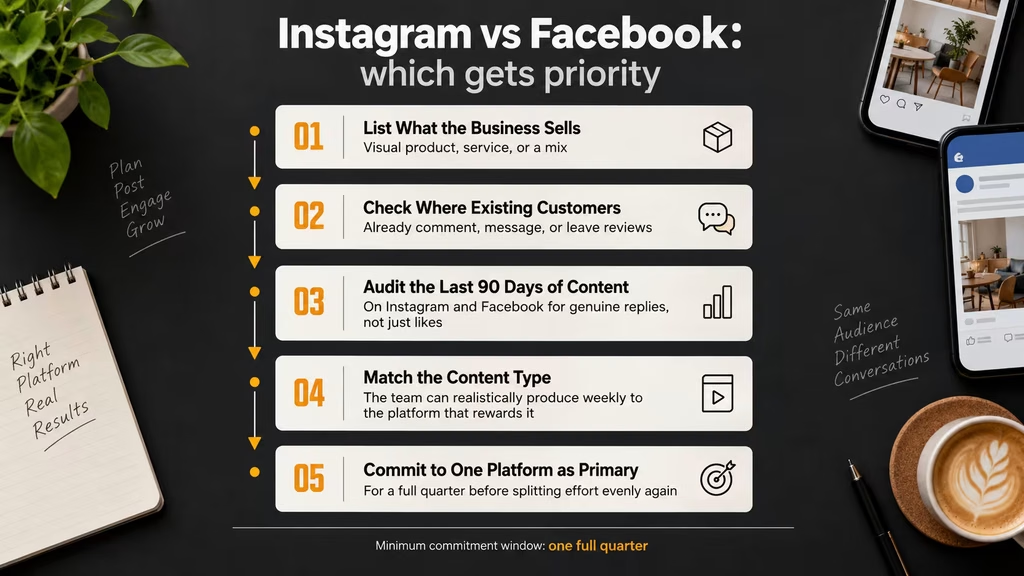
Deciding the instagram vs facebook priority comes down to a short checklist: what the business actually sells, where existing customers already respond, which content type the team can realistically produce weekly, and whether that effort can run consistently for a quarter before judging results, rather than guessing based on which app the owner personally prefers.
- List what the business actually sells: a visual product, a service, or a mix of both
- Check where existing customers already comment, message, or leave reviews
- Audit the last 90 days of content on instagram vs facebook and note which one has genuine replies, not just likes
- Match the content type the business can realistically produce weekly to the platform that rewards it
- Commit to one platform as primary for at least one full quarter before splitting effort evenly again
Following this instagram vs facebook checklist in order avoids the common trap of switching platforms every few weeks based on a single viral post, which resets any algorithmic momentum a page has built.
A full quarter is the minimum window worth committing to before judging results, because both platforms need a consistent posting pattern before their algorithms start showing content to people beyond a business’s existing followers. Checking Meta Business Suite’s own insights panel weekly, rather than relying on gut feeling about which post “felt” successful, keeps the decision grounded in what customers are actually doing.
A business that follows all five steps and still finds both platforms performing similarly is a genuine edge case. There, the deciding factor becomes which platform the owner can sustain consistently, since consistency is what both algorithms reward most.
What Actually Drives Ad Cost on Each Platform
Ad cost on instagram vs facebook is driven by audience competition within a given placement, not by either platform being inherently cheaper. Meta’s Ads Manager runs both through the same auction system, so in Facebook vs Instagram advertising, the cost driver is how many other advertisers are bidding for that audience and placement at once.
A narrow, highly specific audience, such as brides currently planning a Chennai wedding within the next six months, usually costs more per result than a broader awareness audience, regardless of whether the ad runs on Instagram or Facebook. Seasonal demand matters too: wedding season and festival periods in Tamil Nadu push costs up across instagram vs facebook as local businesses compete for the same window.
Businesses new to Meta advertising often assume Instagram is automatically more expensive because it looks more polished. In practice, cost depends on the objective selected, the audience size, and the creative’s own performance, which is why testing both placements within one campaign, rather than running separate instagram vs facebook ad campaigns, usually gives a clearer read on where the budget performs better.
Tracking where the result actually happens matters as much as the ad spend itself. A business running traffic to its own website should have Google Analytics 4 and the Meta Pixel connected before spending on either platform, since without that connection there is no reliable way to tell whether an Instagram-attributed click or a Facebook-attributed click led to a sale. Skipping this step is one of the most common and avoidable reasons a small business ends up guessing which platform “worked” instead of knowing, which is the gap Push Digital’s advertising and tracking setup is built to close.
Where Both Platforms Are Headed and What It Means for 2026 Planning
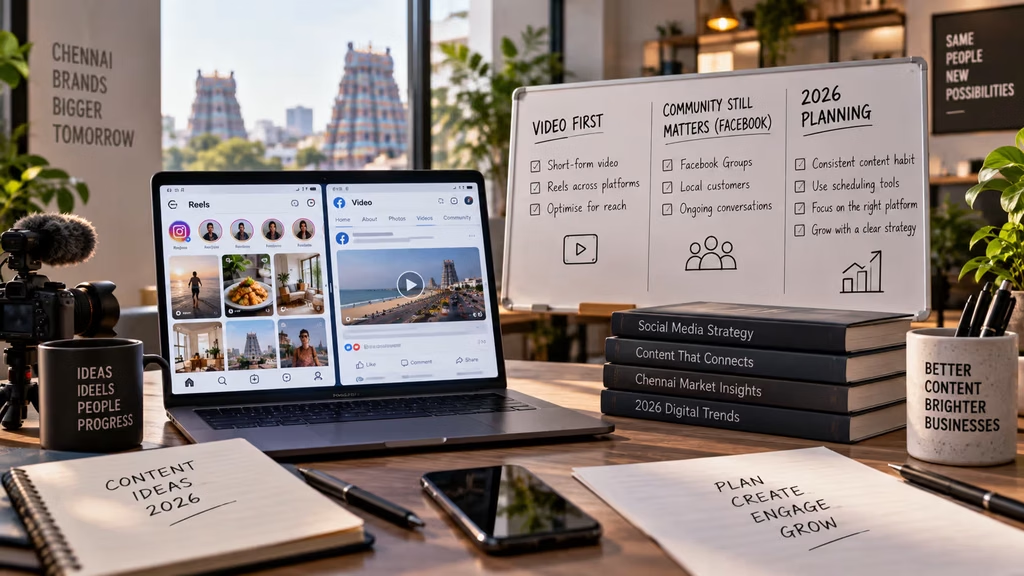
Short-form video has become the dominant format Meta rewards across both Instagram and Facebook, which narrows the practical instagram vs facebook gap for businesses that already produce Reels-style content consistently. A well-made 30-second video now has a real chance of reaching both audiences without being built twice.
What has not converged is the community layer. Facebook Groups remain a distinct feature with no real Instagram equivalent, and businesses that rely on repeat local customers and neighborhood-level trust still get more out of Groups than out of Instagram’s comment sections. Planning for 2026 means building a video-first content habit that works across the instagram vs facebook split, while keeping community and customer-service functions on whichever platform already holds that relationship.
For a Chennai business without an existing Instagram vs Facebook presence to build from, starting with the platform where competitors already have active engagement is usually faster than trying to build both audiences from zero.
Planning tools such as Buffer or Sprout Social can help a small team maintain a consistent posting calendar across instagram vs facebook once the priority is set, but no scheduling tool replaces the underlying decision of which platform gets first attention. A business heading into 2026 planning is better served by locking in one clear content habit, most likely a short-form video routine, and letting the platform priority guide where that habit gets built first.
Conclusion
The instagram vs facebook decision for a Chennai business is not about finding a permanent winner. It comes down to matching platform strengths to what the business sells and how much time its team can realistically give each week. Start by auditing where current customers already respond, commit to one platform as the priority for a full quarter, and adapt content format rather than duplicating it across both feeds.
This week, pull the last ten posts from each platform and note which ones earned genuine replies rather than passive likes. That single audit usually makes the platform priority obvious faster than any general guide can, because it is built from the business’s own audience rather than a global trend report. For businesses that want this mapped out properly against their own customer base, Push Digital’s digital marketing team can help build a platform-specific content plan rather than a duplicated one.
Frequently Asked Questions
Is Instagram or Facebook better for a small business?
Neither is universally better for every business. Instagram suits visual, product-led businesses, while Facebook suits businesses depending on community trust, local groups, and event promotion to reach repeat customers.
Should a business use both Instagram and Facebook?
Most established businesses eventually use both, but a new or resource-limited business should build one platform first, then expand once that page generates consistent replies.
Which platform is cheaper to advertise on, Instagram or Facebook?
Neither platform is inherently cheaper to advertise on. Cost depends on audience size, campaign objective, and creative performance within Meta’s shared ad auction system, not on which platform is chosen.
Does Facebook still work for local, community-driven businesses?
Yes, Facebook still works well for local businesses. Facebook Groups and Events carry real weight for neighborhood-level trust, especially for service businesses depending on repeat local customers over one-time visitors.
What should a business post on Instagram vs Facebook?
Post short visual content and Reels on Instagram and longer updates, customer reviews, and event details on Facebook. Adapt captions for each platform rather than duplicating the exact same post.
Is Instagram better than Facebook for engagement?
Instagram often shows stronger engagement on visual, product-led content, but Facebook Groups and comment threads still drive real engagement for businesses built around community trust and repeat local customers.